Monday, April 23, 2018

Scare tactics used by ransomware

Image source:  dw.com

Ransomware is a type of malware that locks away access to files on a particular computer or network and releases them upon making payments. Recent variants of ransomware do so by encrypting data that makes them impossible to recover without a decryption key. However, many variants of ransomware go beyond just encrypting files just to force payments. Here are some scare tactics used by recent ransomware variants. Keep in mind, however, that making payments does not guarantee the release of a victim’s files.

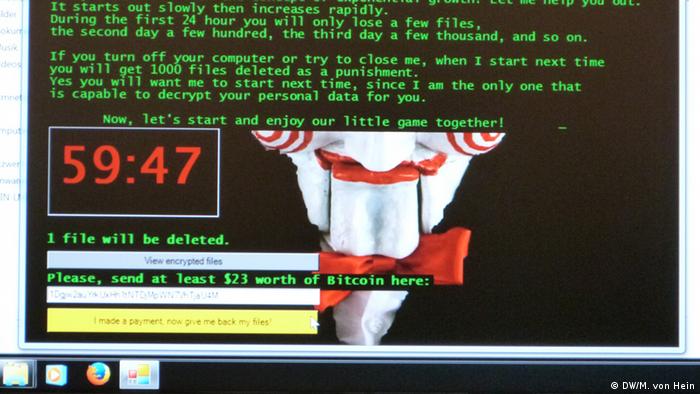
Jigsaw, a ransomware variant that appeared in 2016, featured the image of the antagonist in the “Saw” movie, as well as a countdown timer. While several variants use intimidating images to persuade victims, many ransomware variants have adopted the use of a countdown timer to pressure victims into paying the ransom.

Image source:  neurogadget.net
Other variants went even further and made payments grow exponentially as time progressed, giving victims an illusion of an incentive if they pay now rather than later. There are also those that stretch this payment period for weeks, giving the victim ample time to make the payment.

Some ransomware variants also lie about their capabilities to pressure its victims. Although there are variants that can steal data, there are those who simply say so and threaten victims that their data would be released on the internet if they fail to pay. Some even use the logo of local law enforcement and accuse victims of federal crimes just so they would pay immediately.

SiteLock is a leading business website that offers comprehensive cloud-based website protection that automatically fixes threats, prevents future attacks, accelerates website speed, and meets PCI compliance standards for businesses of all sizes. To know more about its services, visit its website.

Tuesday, February 13, 2018

What you should know about cyberattacks in 2018


Image result for Uber data breaches
Image source: theyeshivaworld.com
2017 has not been very lucky in evading some of the biggest cybersecurity threats in recent history, which affected millions of businesses and consumers through attacks such as WannaCry and Uber data breaches. Think about one in every 15 websites secretly being taken over by cybercriminals to steal credit card information or other personal data. Now more than ever, website owners should be alert and accept the possibility that they could be part of statistics.

Here are some cyberattack trends that everyone needs to be aware of in 2018.

Cryptojacking, which started to explode toward the end of 2017, could rise in incidence as the value of cryptocurrencies further escalates. The largest portion of this activity is likely to take place from legitimate websites compromised to mine currency for the criminal wallet. The world could also see more PowerShell-based attacks, which are malicious script-based attacks that are very difficult to identify and can easily evade antivirus engines.

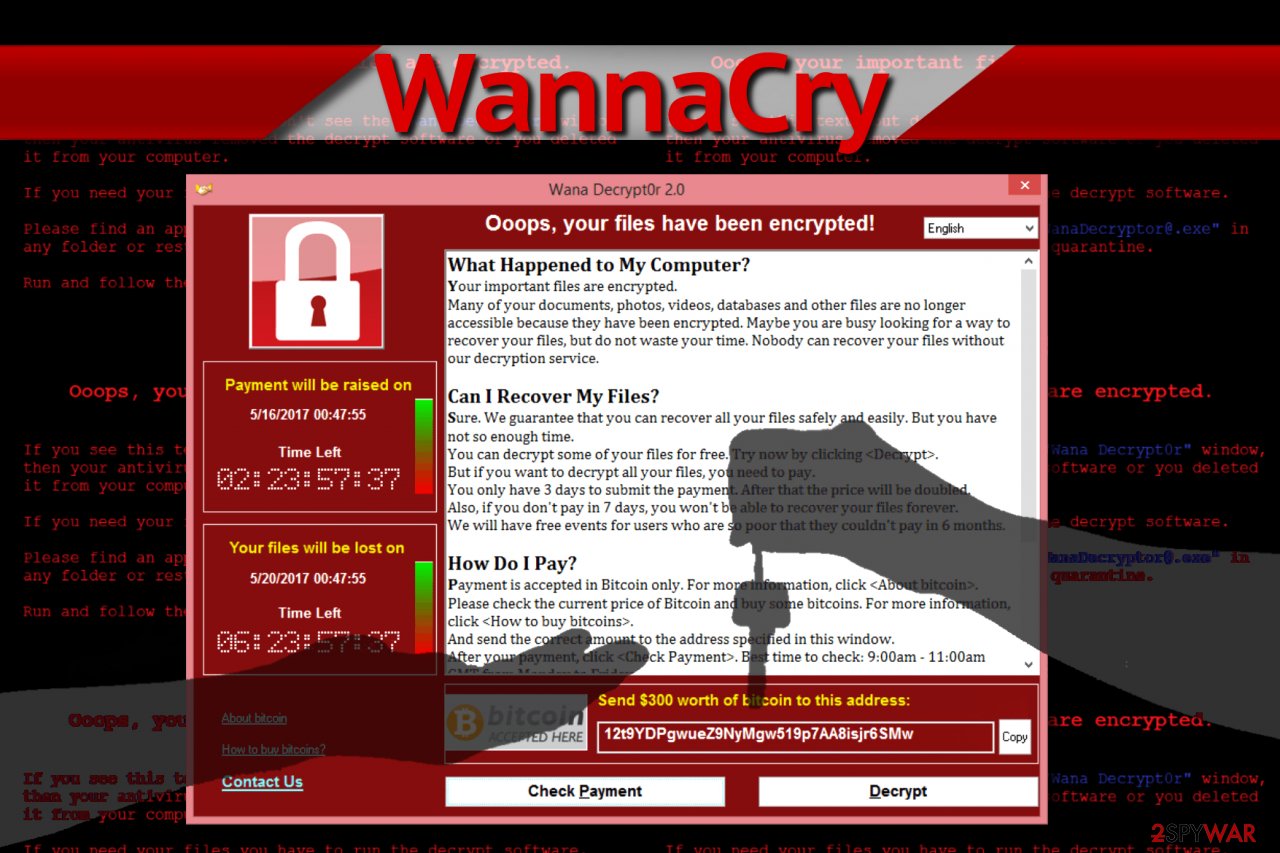
Image result for WannaCry
Image source: 2-spyware.com
In 2018, more cybercriminals are predicted to more frequently use worms to launch malware. More malware families are seen to use the WannaCry and Trickbot use worm functionality so spread, as network compromise from worms proliferate faster than many other techniques.

In general, cyber attackers are expected to take advantage of website visitors through different means, including backdoor files (allowing them administrative access without website owner’s knowledge), direct visitor attacks (accounting for 26 percent of malicious files cleaned by website security provider SiteLock in the third quarter of 2017), and phishing kits or illegitimate replicas of popular sites such as Google or online banking apps.

Website security should be given ample attention and be an ongoing strategy for organizations. Users should use stronger, unique passwords; update apps and add-ons as soon as security patches are available; and maintain offsite backups of all content, to name a few methods for protection.

SiteLock is a global leader in business website security solutions founded in 2008 and serving over 8 million customers worldwide. Read more on this website.s

Tuesday, November 14, 2017

Why should people backup their website files

Image source: blogvault.net
Backing up computer files, much like fastening seatbelts, brushing teeth, and seeing the doctor, is a must. Ever since the dawn of the internet, many dangers have emerged to threaten the very existence of files. These threats double especially when people have websites that contain very important information. Backing up of the files kept on websites assures the owners that should any virus or malware bring a website to ruin, important data are kept safe and locked away.

A lot of cybercriminals out there have figured out more sophisticated means to make a buck. They and their creations, these viruses and harmful programs have spread all over the worldwide web. They’ve crashed billions of computers and countless websites, erasing files for good.

Image source: autodesk.com
While it’s true that many of these files can be recovered, sometimes, the effort is just not worth it. The old saying that an ounce of prevention is a lot better than tons of cure applies oh-so-well in this particular situation. The mere act of saving files once a week to an external drive changes everything.

Just be sure to run them through an anti-virus program first before backing them all up.

SiteLock provides its clients with only the best internet security. To find out more about SiteLock, visit its official website.

Thursday, October 5, 2017

Small businesses should not underestimate web security


Image source: ezsitebuilders.com

When websites receiving a huge number of visitors get hacked, it makes headlines. For example, when several government websites were hacked by ISIS weeks ago, the incidents were all over the news. The same can be said when the Equifax data breach was made known to the public earlier this month.

Because of this, many small business owners share a common misconception that their website is safe from cyberattacks. They rely on what is called “security by obscurity,” mistakenly thinking that because their website is not as popular as bigger websites, security concerns are little to none.

The unfortunate reality is that there is no such thing as “too small to hack.” Any website is prone to hacks or other forms of cyber threats.

Image source: techdonut.co.uk
Cybercriminals target websites for the following resources:

Bandwidth: A huge bandwidth is a costly commodity nowadays. Thus, cybercriminals who illegally share or distribute software online hack web servers to steal bandwidth so that they could carry on their illicit activity.

Website traffic: If a website, even if it is small, has an active comment section, cybercriminals can use it to their advantage by sending spam or stealing website traffic for their own profit.

Confidential data: One of the worst web attacks by hackers is stealing customer data, including email addresses. Small businesses have to defend their websites against this type of attack as it can lead to loss of customer trust.

SiteLock helps secure their clients’ websites by scanning for clarity, blocking ambiguity, and having frequent backups. To review the company’s services, visit its official website.

Friday, August 11, 2017

The basics of bandwidth management


Image source: techterms.com
One of the integral tasks in setting up and running a website is allocating and managing bandwidth to the people who help keep it operational. Probably if it were only one person running the website, then it wouldn’t be so much of a problem. But if there were more than ten people using one internet connection then business owners should know just exactly how to use bandwidth.

Bandwidth is the max data transfer rate of a connection, and as such, it measures the amount of data that can be used over a period of time. An example would be the commonly-used gigabit Ethernet connection, which has a bandwidth of 1,000 Mbps, or 125 megabytes per second. Internet cables clock in at around 25 Mbps.

Image source: verizon.com
Managing this depends on how many people will be using the entire system. Larger companies such as call centers would need a higher bandwidth, while smaller businesses may do well with a few internet cables.

It is important to remember that bandwidth doesn’t measure how fast the data travels since that information depends on the cables themselves. Although it can be ruled that the speed of this is negligible. What business owners need to calculate more than the speed is the amount of information needed. That also has a significant impact on bandwidth management.

SiteLock is a global industry leader when it comes to business website security solutions. One of their specializations is accelerating site performance through bandwidth management. Learn more about SiteLock by logging on to this website.

Sunday, June 11, 2017

What to do in the event of a security breach


Image result for security breach
Image source: lawtechnologytoday.org
The recent Wannacry virus caused a lot of damage to many companies when it wreaked havoc on the web just last April. While some of us are still reeling from its effects, it would be good to pick up a few lessons from the disaster. Here are the next logical steps to take in the event of a security breach.

This must first be communicated clearly and urgently within the organization. Someone simply has to press the panic button so that people will react promptly.

The next step is to disconnect. The team has to assume that the breach has already corrupted at least one computer. It is also prudent to assume that there is a malicious intent to corrupt other computers located in the same network. The logical solution is to eliminate the network so that there is no connection that runs from one computer to another.

Image result for disconnecting from the network
Image source: blog.iinet.net.au
If the problem has in fact infiltrated the company’s system, disconnecting from the network somewhat stops the bleeding and this limits the problem from spreading further to other computers.

Cleaning must be done on all computers individually. At some point, the OS will be releasing the latest updates once the developer has identified the nature of the virus or the malware that has breached the system, and these updates must be installed completely.

It is very hard to tell the extent of damage there is at the onset. But companies can surely put into practice a number of things in their breach protocol to ensure that the problem does not become more complicated.

Since 2008, SiteLock has been a key player in business website security solutions, serving a worldwide customer base of more than 8 million businesses. For the latest web security solutions, please visit their website.

Friday, May 26, 2017

Signs of ransomware vulnerability

A business is a target for ransomware malice, because of the nature of interconnectivity in the workplace. Historically, a lot of the biggest online disasters are those which targeted huge businesses and caused significant damage. Here are some signs that your business may be vulnerable.

Image result for suspicious emails
Image source: mitostudios.com
1. A high incidence of suspicious incoming emails

Every so often, you might encounter an email which doesn’t make sense. You don’t know the recipient, and you don’t even see any relation between his industry and yours. It could well be a real person doing this, but it could also be a bot. Now, if such emails are too frequent, chances are you are being targeted.

2. Frequent pop-up windows that come out of nowhere

A lot of malicious ware cause damage because these have been allowed to enter your system somehow. Malware programmers use bait to catch unsuspecting victims. A very effective bait is pop-up windows. These windows have content which can be quite enticing. Perhaps they offer discounts on a product. They can even be a charity pitch. They can be anything, but if they come out of nowhere, be very suspicious.

Image result for Frequent pop-up window
Image source: blog.malwarebytes.com
3. No web security scheme

If you handle any business which has a network of computers that are required to do work, and you have no web security scheme in place, this is a big sign that you are inviting trouble. You have to note that this is the exact profile that malicious elements are looking for.

Since 2008, SiteLock has been a key player in business website security solutions, serving a worldwide customer base of more than 8 million. For the latest web security solutions, please visit the company’s website.